Fan out agents across git worktrees
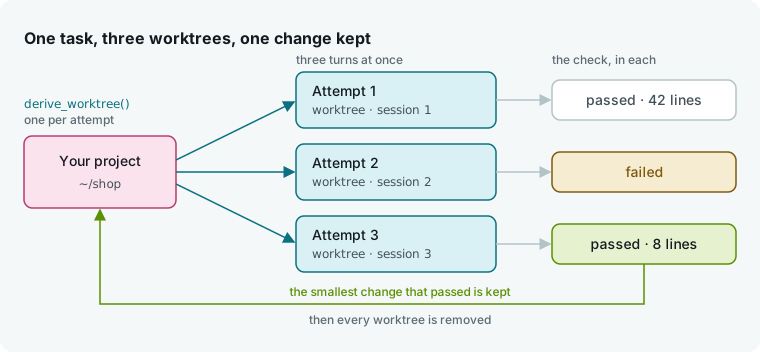
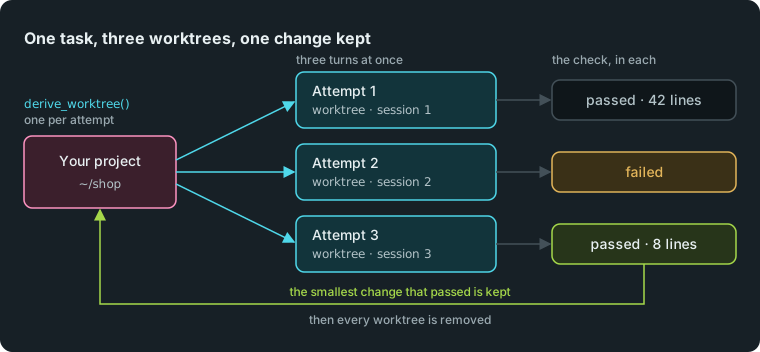
Write a flow that sends one task to three agent sessions at once. Each session works in its own git worktree so no attempt touches another's files. The flow runs your check in every worktree, copies the smallest passing change into your project, and removes the worktrees.
What you need
- Humanize installed and one coding agent signed in (Finish your first task in the terminal).
- Experience writing a flow (Write your first flow).
- A git repository with at least one commit and a test command. This tutorial uses
~/shopandpython3 -m pytest -q. giton your PATH.
1. Declare what the flow needs
Create .hmz/flows/best_of/__init__.py in your project and declare its roles and settings:
import asyncio
import shlex
from datetime import timedelta
from typing import NamedTuple

from hmz.flows import (
    Agent,
    AgentCollection,
    Budget,
    BudgetExceeded,
    EnvCollection,
    FlowContext,
    FlowParams,
    GitWorktreeEnvMixin,
    LocalEnv,
    ShellEnvMixin,
    flow,
)


class Agents(AgentCollection):
    coder: Agent


class Workspace(LocalEnv, ShellEnvMixin, GitWorktreeEnvMixin):
    """The project. The flow may run programs in it and add worktrees of it."""


class Envs(EnvCollection):
    workspace: Workspace


class Params(FlowParams):
    count: int = 3
    minutes: float = 10
    check: str = "python3 -m pytest -q"


class Attempt(NamedTuple):
    number: int
    tree: Workspace
    passed: bool
    lines: int
Workspace represents your project. LocalEnv binds it to the starting directory so you do not need -e. GitWorktreeEnvMixin lets the flow create worktrees, and ShellEnvMixin lets it run commands. Params sets the attempt count, the per-turn time limit, and the check command.
2. Give each attempt a worktree and a turn
Add the best_of flow and the attempt helper below the classes:
@flow(agents=Agents, envs=Envs, params=Params)
async def best_of(
    task: str, *, agents: Agents, envs: Envs, params: Params, ctx: FlowContext
) -> int | None:
    """Several attempts at one task, each in its own worktree. The best is kept."""
    coder, workspace = agents["coder"], envs["workspace"]
    trees: list[Workspace] = []

    async def attempt(number: int) -> Attempt | None:
        tree = await workspace.derive_worktree()
        trees.append(tree)
        try:
            await coder.run(
                f"{task}\n\nYou are attempt {number} of {params.count}.",
                session=await coder.spawn(),
                env=tree,
                budget=Budget(
                    duration=timedelta(minutes=params.minutes), graceful=False
                ),
            )
        except BudgetExceeded as error:
            if not error.own:
                raise  # the run's own budget is spent
            print(f"attempt {number}: out of time")
            return None
        await tree.exec(["git", "add", "-A"])
        status, _, _ = await tree.exec(shlex.split(params.check))
        _, stat, _ = await tree.exec(["git", "diff", "--cached", "--numstat"])
        lines = sum(
            int(n) for row in stat.splitlines() for n in row.split()[:2] if n.isdigit()
        )
        verdict = "passed" if status == 0 else "failed"
        print(f"attempt {number}: check {verdict}, {lines} lines changed")
        return Attempt(number, tree, status == 0, lines)
Each call to attempt runs six steps:
derive_worktree()creates a worktree under~/.hmz/envs/checked out at your project's current commit, excluding uncommitted changes, and returns it as an environment.coder.spawn()opens a dedicated session so the turns can run in parallel.env=treeruns the turn inside the worktree instead of your project.budget=caps the turn on top of the run budget, andgraceful=Falsestops the agent the moment the minutes are up.BudgetExceededwithownset drops the timed-out attempt and continues; withoutown, the whole run's budget is spent and the flow re-raises the error.- The three
execcalls stage the worktree's changes, run your check, and count the changed lines.
3. Run them at once, keep the best, clean up
Finish best_of after attempt:
    try:
        done = await asyncio.gather(*(attempt(n) for n in range(1, params.count + 1)))
        passed = [one for one in done if one and one.passed]
        if not passed:
            print("no attempt passed the check: nothing kept")
            return None
        best = min(passed, key=lambda one: one.lines)
        _, kept, _ = await best.tree.exec(["git", "write-tree"])
        await workspace.exec(
            ["git", "restore", f"--source={kept.strip()}", "--worktree", "--", "."]
        )
        print(f"kept attempt {best.number}")
        return best.number
    finally:
        for tree in trees:
            await workspace.exec(
                ["git", "worktree", "remove", "--force", str(tree.workdir)]
            )
asyncio.gather runs every attempt in parallel and waits for them to finish. The flow picks the passing attempt with the fewest changed lines, then runs git write-tree in that worktree and git restore in your project to copy the files over without committing them. Because Humanize never removes worktrees on its own, the finally block runs git worktree remove on each one even if an attempt raises.
4. Test it without an agent
Save this test as tests/test_best_of.py to run the flow against an in-memory fake agent and project with run_fake:
import asyncio

from hmz.sdk import fakes

CHANGED = {"1": 40, "2": 9, "3": 12}  # lines each attempt changes
FAILS = "2"  # the attempt whose check fails


def test_the_smallest_passing_attempt_is_kept() -> None:
    attempts: dict[str, str] = {}  # worktree -> attempt number

    async def reply(prompt: str, *, session: fakes.FakeSession, **_: object) -> str:
        number = prompt.split("attempt ")[1][0]
        attempts[str(session.placement.workdir)] = number
        await asyncio.sleep(0.01)  # long enough for the turns to overlap
        return "done"

    def run(command: tuple[str, ...], env: fakes.FakeEnvDriver) -> tuple[int, str, str]:
        number = attempts.get(str(env.workdir), "")
        if command == ("python3", "-m", "pytest", "-q"):
            return int(number == FAILS), "", ""
        if command == ("git", "diff", "--cached", "--numstat"):
            return 0, f"{CHANGED[number]}\t0\tshop/checkout.py\n", ""
        return 0, "", ""

    project = fakes.FakeEnvDriver({"shop/checkout.py": b""}, run=run)
    coder = fakes.FakeAgentDriver(reply=reply)

    kept = asyncio.run(
        fakes.run_fake(
            "best_of", "add a discount code", agents={"coder": coder}, local=project
        )
    )

    assert kept == 3  # attempt 2 is smaller, but its check failed
    assert coder.peak == 3  # three turns at once
    removed = sum(one[:3] == ("git", "worktree", "remove") for one in project.commands)
    assert removed == 3  # every worktree is gone
The run function intercepts the flow's exec calls so attempt 2 fails the check and each attempt reports its own line count. Run the test from your project folder, where run_fake finds the flow by name, in a Python environment with hmz and pytest installed:
python3 -m pytest -q tests/test_best_of.py

5. Run it on a task
Commit your work, then run the flow. budget.duration limits the whole run, while minutes limits each turn:
hmz exec -f @local/best_of -a coder=claude/claude-haiku-4-5 -p budget.duration=30m "Add a discount code to checkout"Three turns start at once. When they finish, the flow prints the result of each attempt and which one it kept.
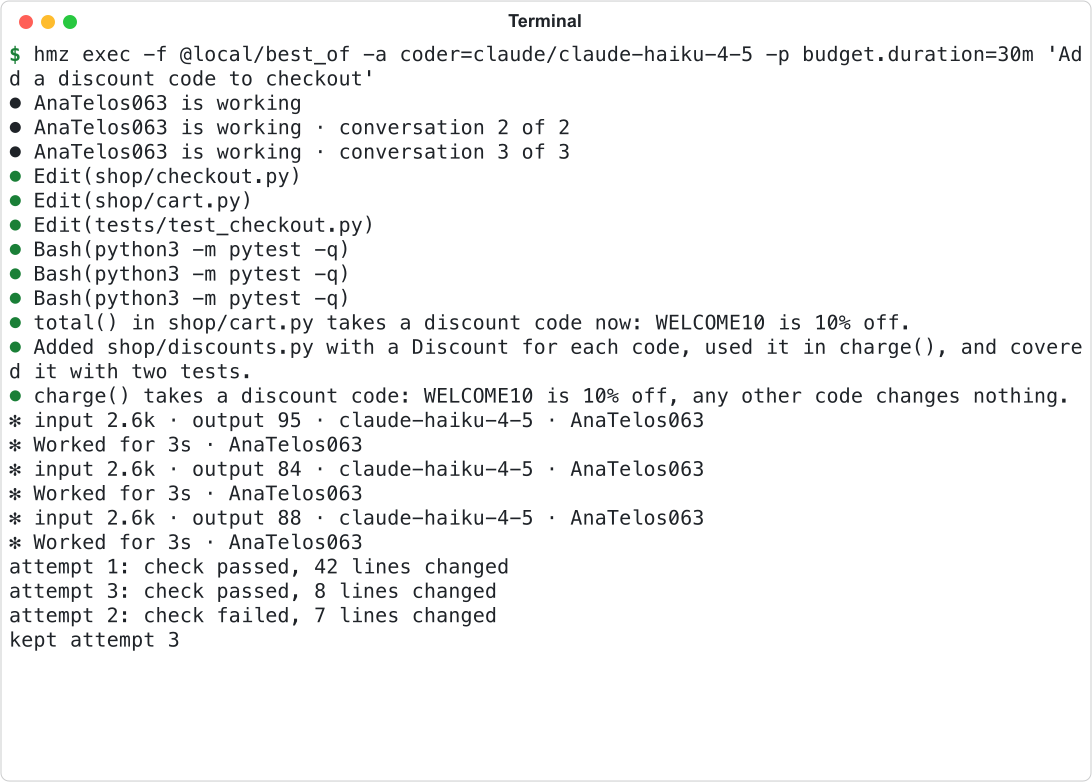
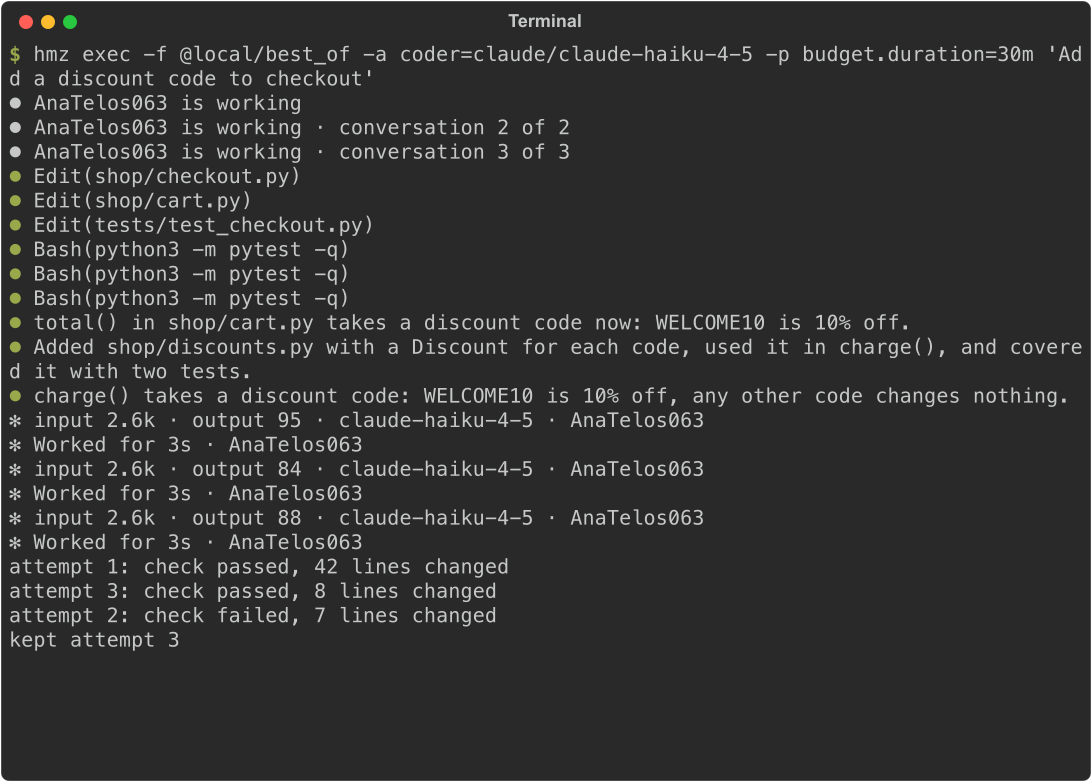
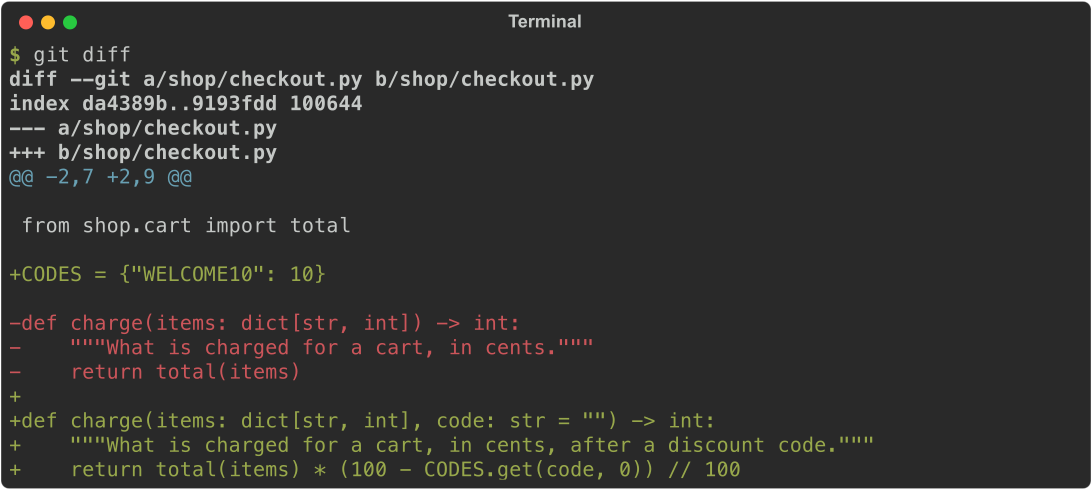
Inspect the kept change in your uncommitted working tree:
git diff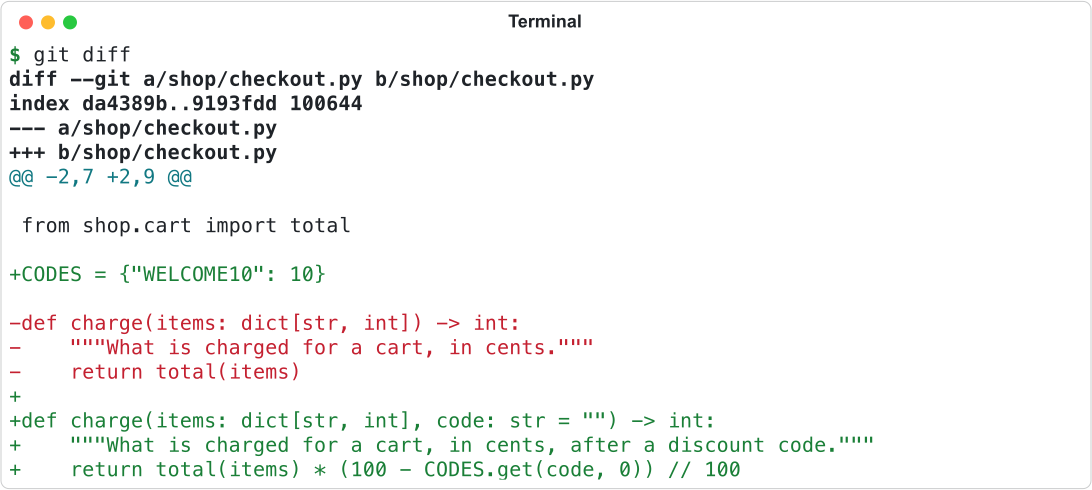
Confirm the worktrees are gone and only your main checkout remains:
git worktree list

Pass -p to override any setting: -p count=5 runs five attempts, -p minutes=5 gives each turn five minutes, and -p check="npm test" changes the check command.
6. Watch the sessions
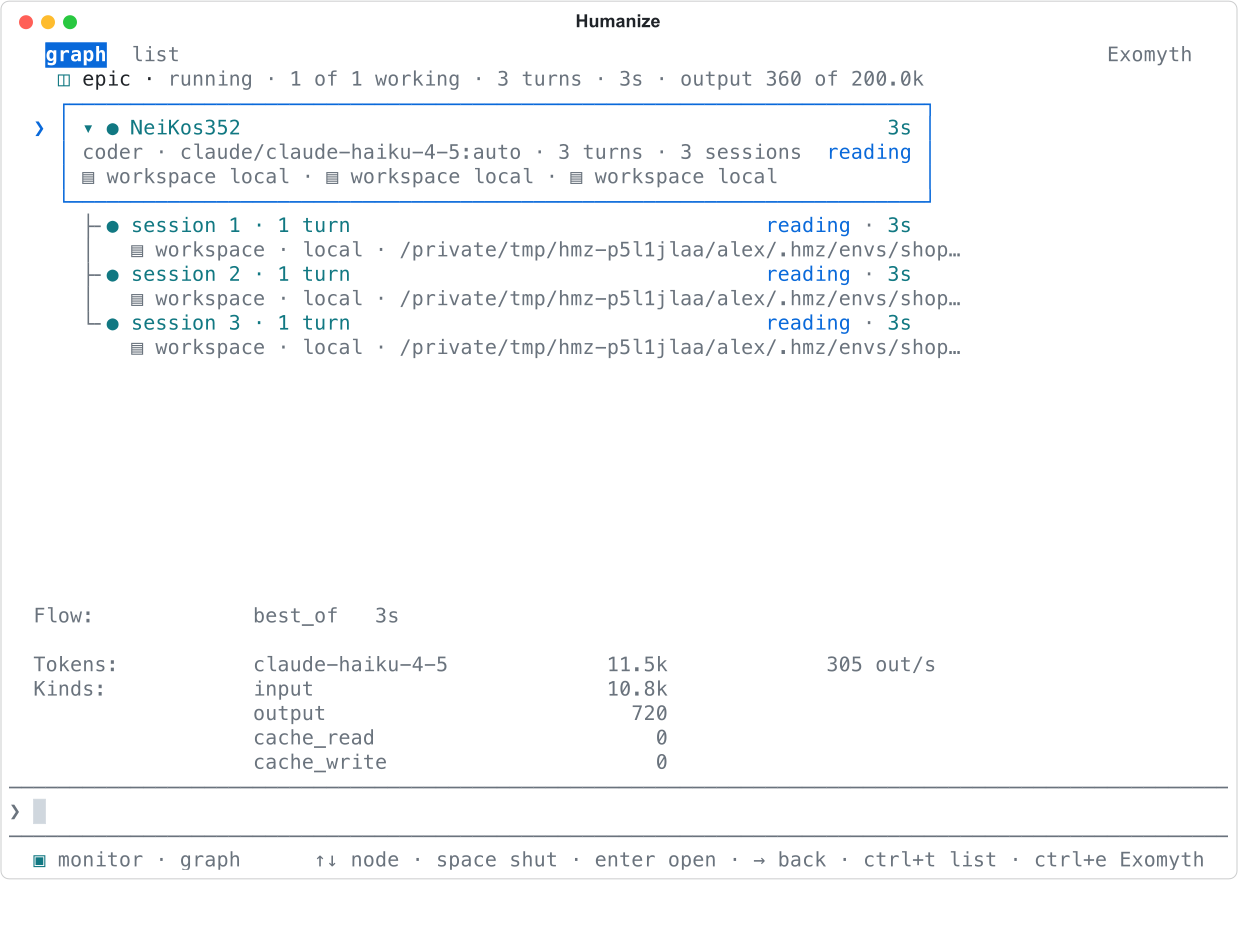
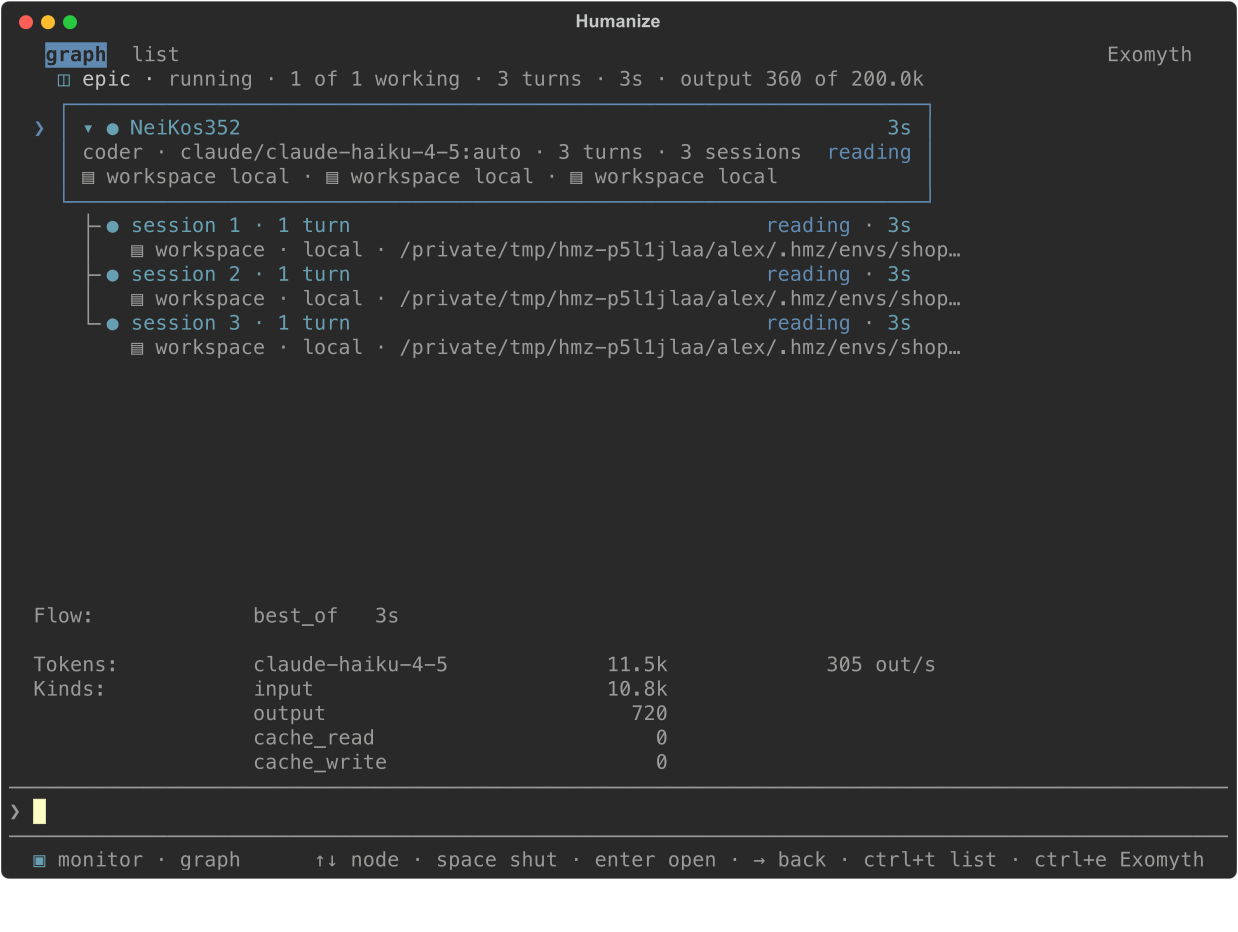
Open Humanize Desktop while the flow runs and select the epic under your project in the sidebar. The graph shows the coder agent with three parallel session lanes, and the Environments list on the right shows each session's worktree.
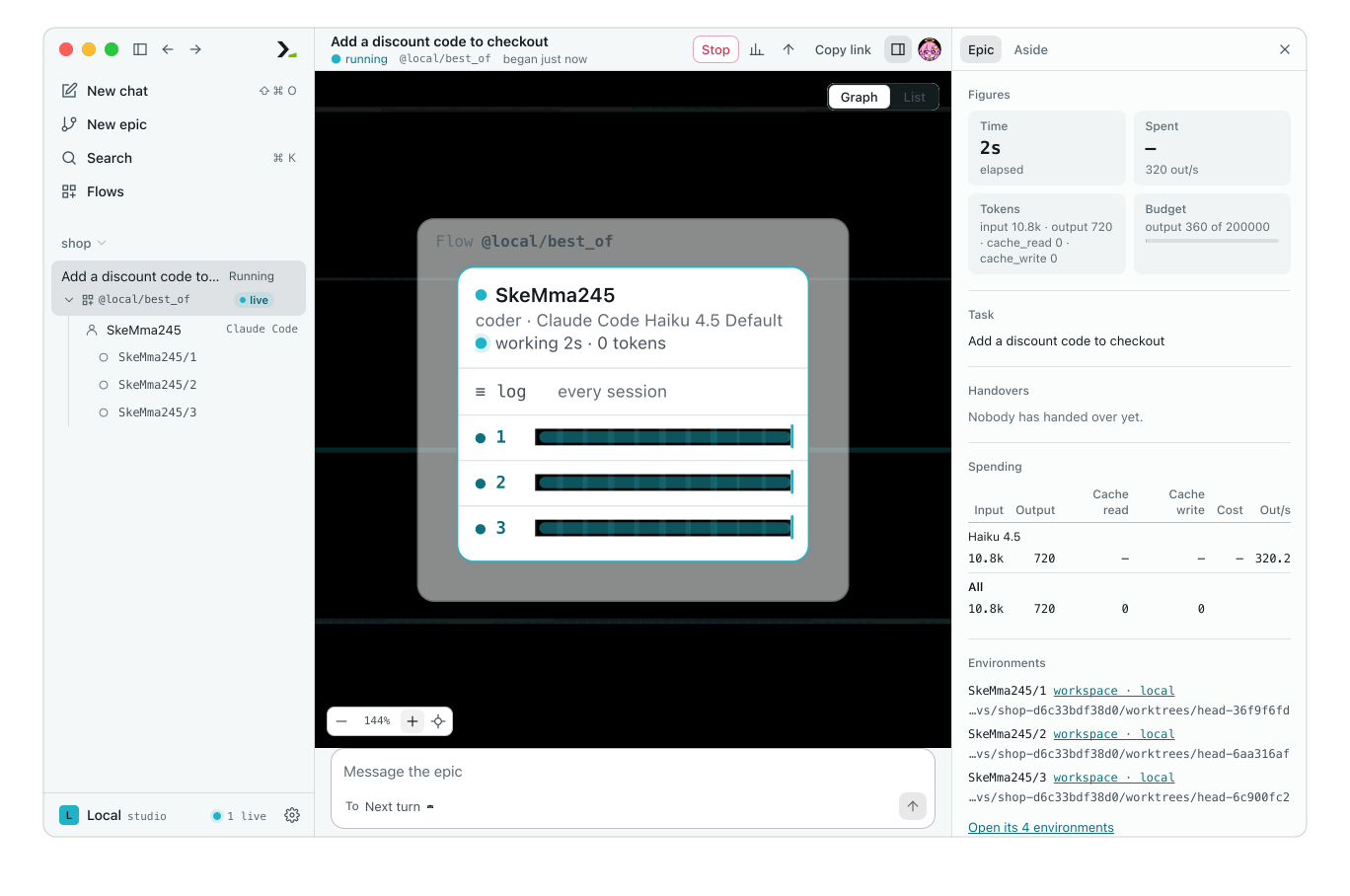
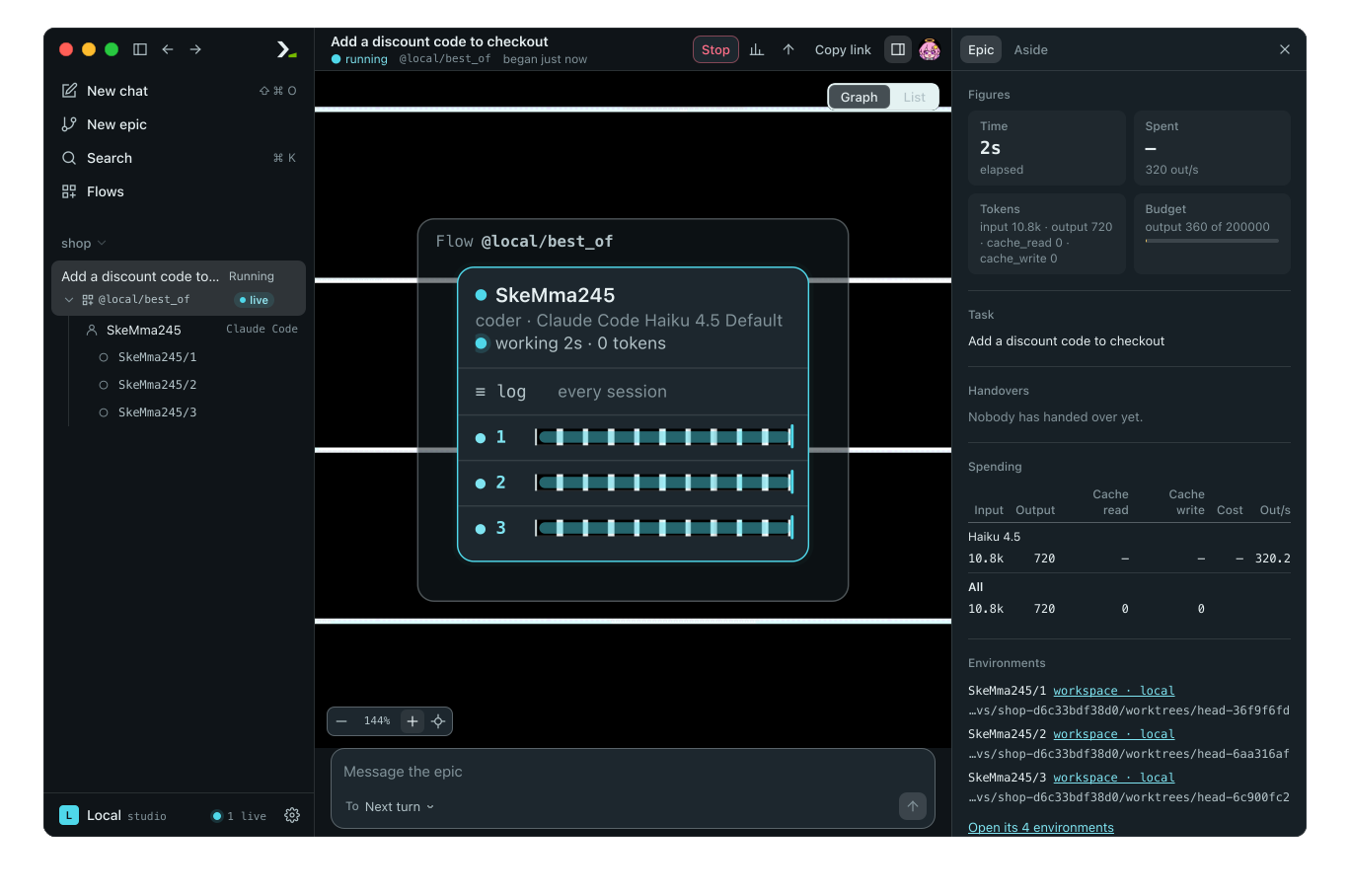
To run and watch the flow in the terminal interface instead, open hmz and run /flow @local/best_of once to pick an agent for coder and set a budget (see Finish your first task in the terminal). Then start the task:
/flow @local/best_of Add a discount code to checkoutPress ← on the empty prompt to open the monitor, press space on the agent to list its sessions and worktrees, and press enter on a session to read its transcript.
What you did
- Declared a project role that creates git worktrees and runs shell commands.
- Ran three parallel agent sessions with
asyncio.gatherunder per-turn time limits. - Kept the smallest change that passed your check.
- Cleaned up the worktrees.
- Verified the flow with fakes and in the UI.
Next
- Worktrees, clones and scratch: other isolated environments a flow can create.
- Concurrent turns: more patterns for running turns in parallel.
- Budgets in a flow: limits for a run, a call, and a turn.
- Test a flow: full reference for testing with fakes.