Concurrent turns
A flow is an async def function, so you run several turns at once with standard asyncio. Give each concurrent turn its own session.
Take several turns at once
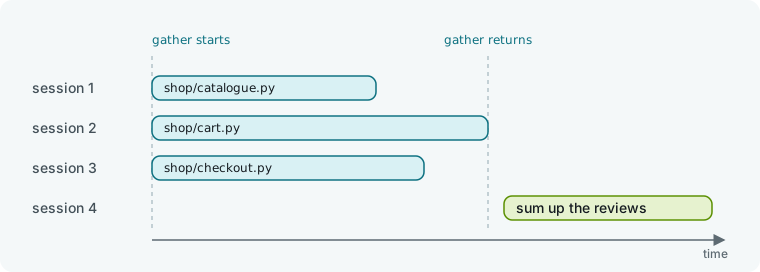
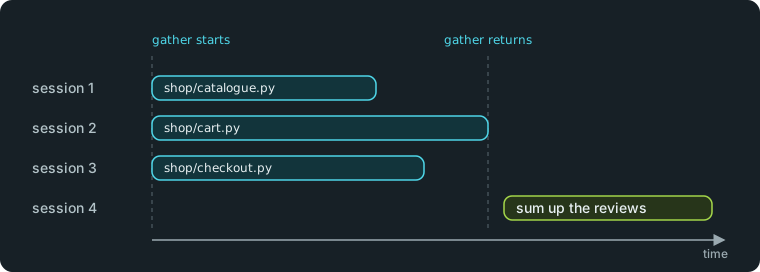
Open a session per turn with spawn() and pass the coroutines to asyncio.gather. This flow has one reviewer read three files at the same time, then sum up the reviews in a fourth turn.
# .hmz/flows/review_parts/__init__.py
import asyncio

from hmz.flows import (
    Agent,
    AgentCollection,
    EnvCollection,
    FlowContext,
    FlowParams,
    LocalEnv,
    flow,
)

PARTS = ("catalogue", "cart", "checkout")


class Agents(AgentCollection):
    reviewer: Agent


class Envs(EnvCollection):
    workspace: LocalEnv


@flow(agents=Agents, envs=Envs, params=FlowParams)
async def review_parts(
    task: str, *, agents: Agents, envs: Envs, params: FlowParams, ctx: FlowContext
) -> str:
    """One reviewer reads three files at once, then sums up."""
    reviewer, workspace = agents["reviewer"], envs["workspace"]

    async def review(part: str) -> str:
        session = await reviewer.spawn()  # one session per concurrent turn
        return await reviewer.run(
            f"{task}\n\nLook only at shop/{part}.py.", session=session, env=workspace
        )

    notes = await asyncio.gather(*(review(part) for part in PARTS))
    return await reviewer.run(
        "Sum up these reviews:\n\n" + "\n\n".join(notes),
        session=await reviewer.spawn(),
        env=workspace,
    )
asyncio.gather starts the three turns together and returns their answers in the order of PARTS, whichever turn finishes first.
One session takes one turn at a time; calling run on a busy session raises SessionError. Different sessions of the same agent can run at the same time, so call spawn() for each concurrent turn.
Sharing a folder works here because the turns only read files. When concurrent turns write files, give each its own git worktree: see Worktrees, clones and scratch.
Choose how to wait
Use standard asyncio primitives to control how turns run and finish.
| Tool | What it does with turns |
|---|---|
asyncio.gather | Waits for every turn. Answers come back in the order given. |
asyncio.TaskGroup | Waits for every turn. When one fails, cancels the others. |
asyncio.wait | Returns when the first turn ends, or when all have. |
asyncio.timeout | Cancels the turns inside it after a time. |
asyncio.Semaphore | Lets only so many turns run at once. |
Cancelling a task that awaits a turn interrupts that turn's agent and raises asyncio.CancelledError from run.
Limit how many run at once
Wrap your turn in an asyncio.Semaphore to cap concurrency. Humanize sets no cap of its own.
    gate = asyncio.Semaphore(2)

    async def review(part: str) -> str:
        async with gate:  # at most two turns at a time
            return await reviewer.run(
                f"{task}\n\nLook only at shop/{part}.py.",
                session=await reviewer.spawn(),
                env=workspace,
            )

    notes = await asyncio.gather(*(review(part) for part in PARTS))
A cap helps avoid rate-limit and lock errors. Running too many turns at once can raise HarnessThrottled when the provider refuses excess requests, or HarnessContended when two turns hit the same local CLI store at once.
All concurrent turns draw from the flow's budget. Pass budget= to run to cap a single turn: see Budgets in a flow.
Handle a turn that fails
Use asyncio.TaskGroup to cancel sibling turns when one fails. In asyncio.gather, the first error raises in the flow while the remaining turns keep running. With asyncio.TaskGroup, the first error cancels the other turns and reaches except* with its original class:
    try:
        async with asyncio.TaskGroup() as group:
            tasks = [group.create_task(review(part)) for part in PARTS]
    except* HarnessError as failed:
        print(f"{len(failed.exceptions)} review failed; the others were cancelled")
    else:
        notes = [one.result() for one in tasks]
Import HarnessError from hmz.flows. Calls to subflows work the same way: their exceptions arrive in except* with their own class.
Keep the first answer
Wait with FIRST_COMPLETED and cancel the pending tasks to keep the first answer and stop the rest.
    tasks = [asyncio.create_task(review(part)) for part in PARTS]
    done, pending = await asyncio.wait(tasks, return_when=asyncio.FIRST_COMPLETED)
    for task in pending:
        task.cancel()  # interrupts that turn's agent
    await asyncio.gather(*pending, return_exceptions=True)
    first = done.pop().result()
Wrap a turn in asyncio.timeout and catch TimeoutError to give up after a set time.
Watch concurrent turns run
In the app
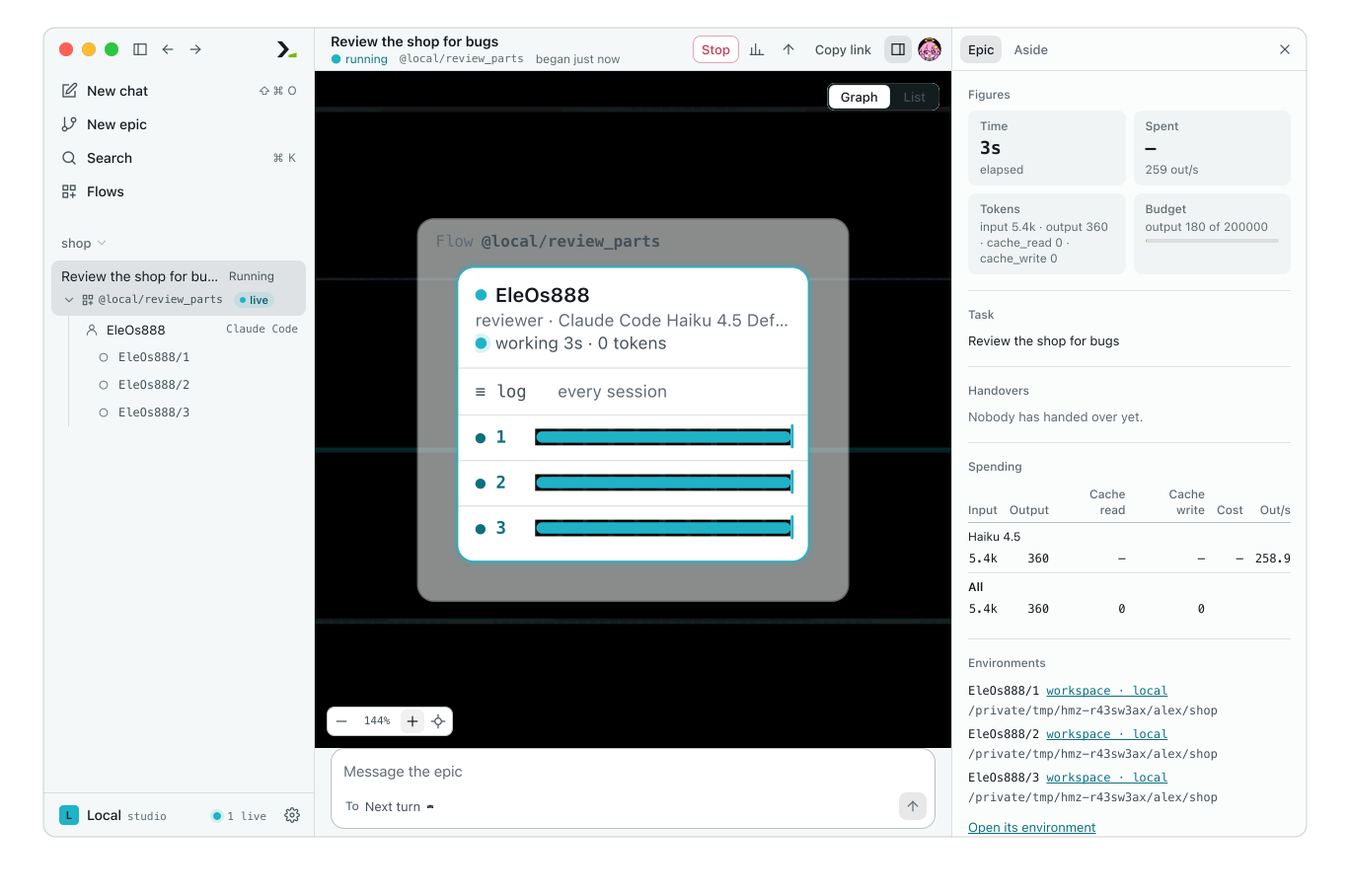
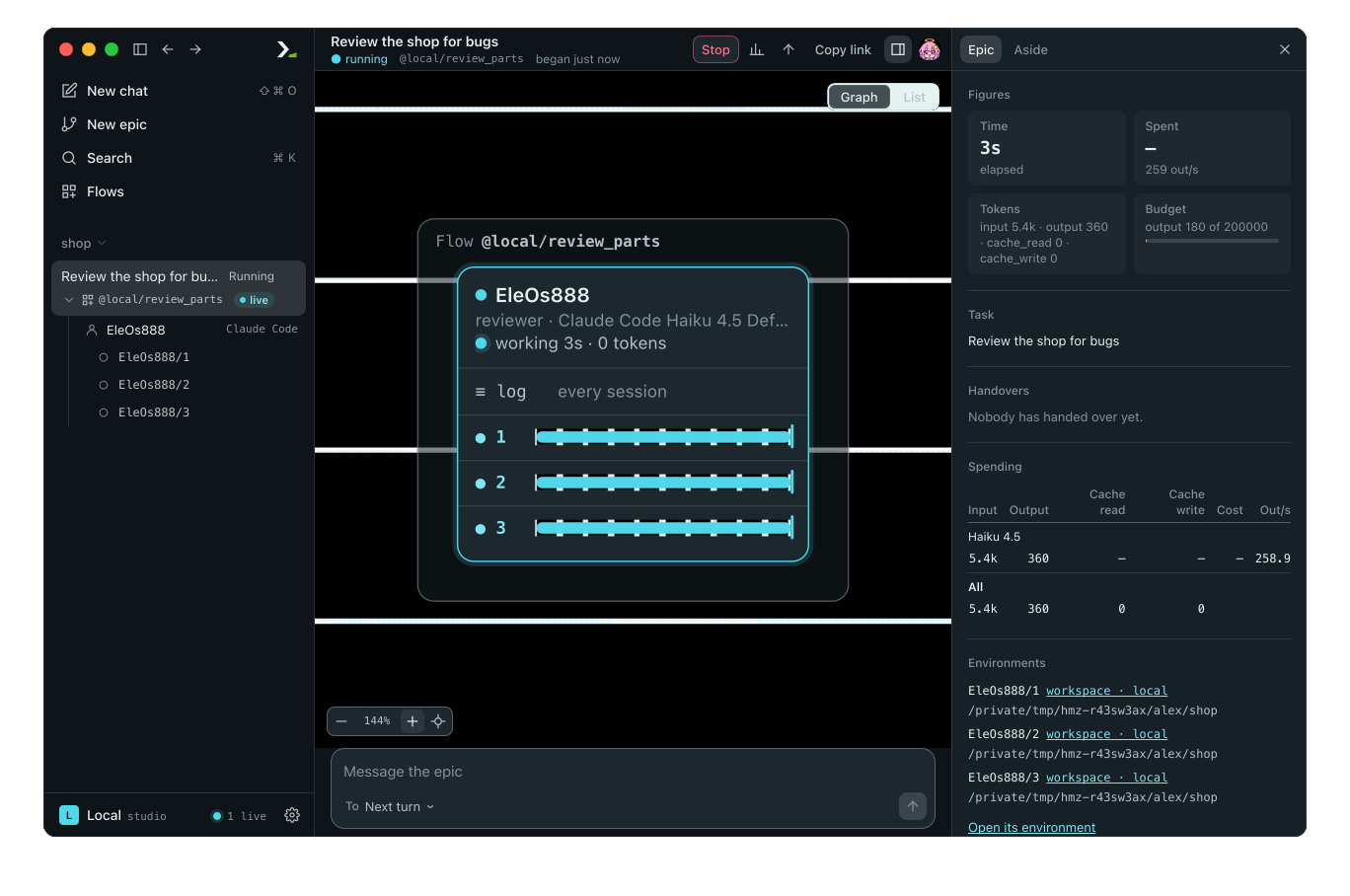
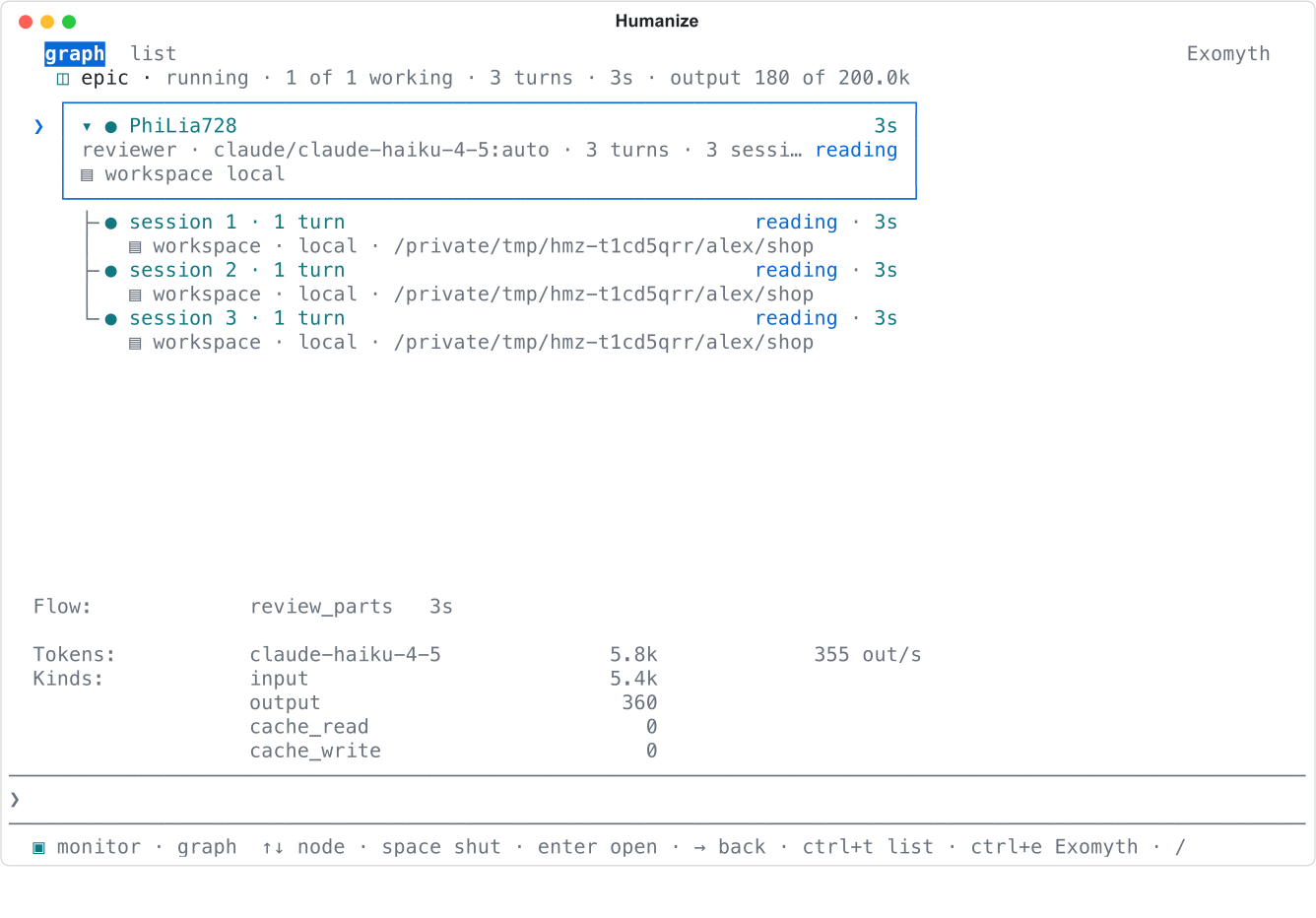
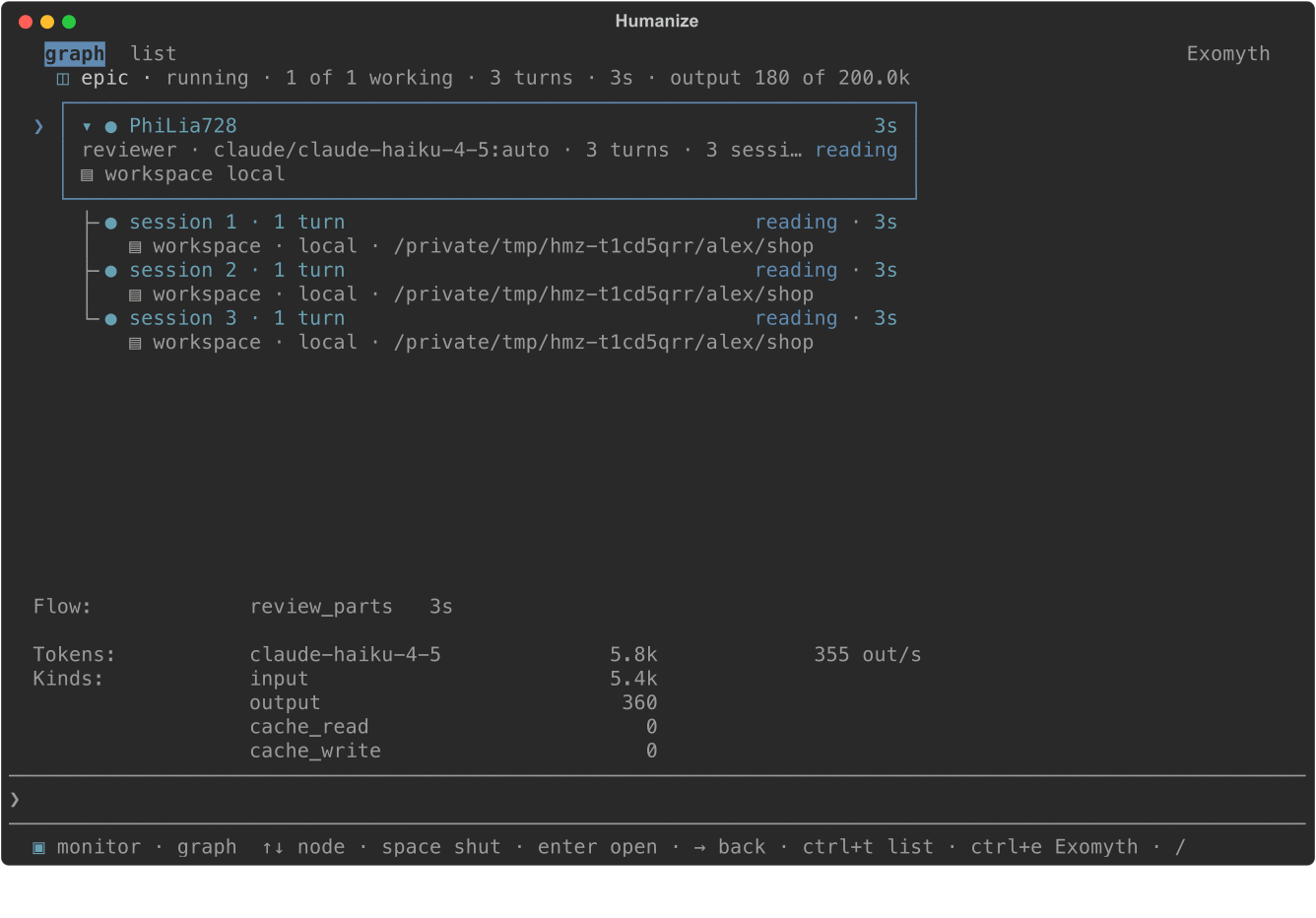
Start the flow from New epic. The agent's node in the graph draws one bar per session under every session, and the sidebar lists each session under the agent. The Epic pane shows each session's environment.
In the terminal
In hmz, type /flow review_parts once to set the flow up, then /flow review_parts <task> to start it. The transcript announces each turn as it starts, up to conversation 3 of 3. Press left to open the monitor, then space on the agent's node to list its sessions.
From the command line
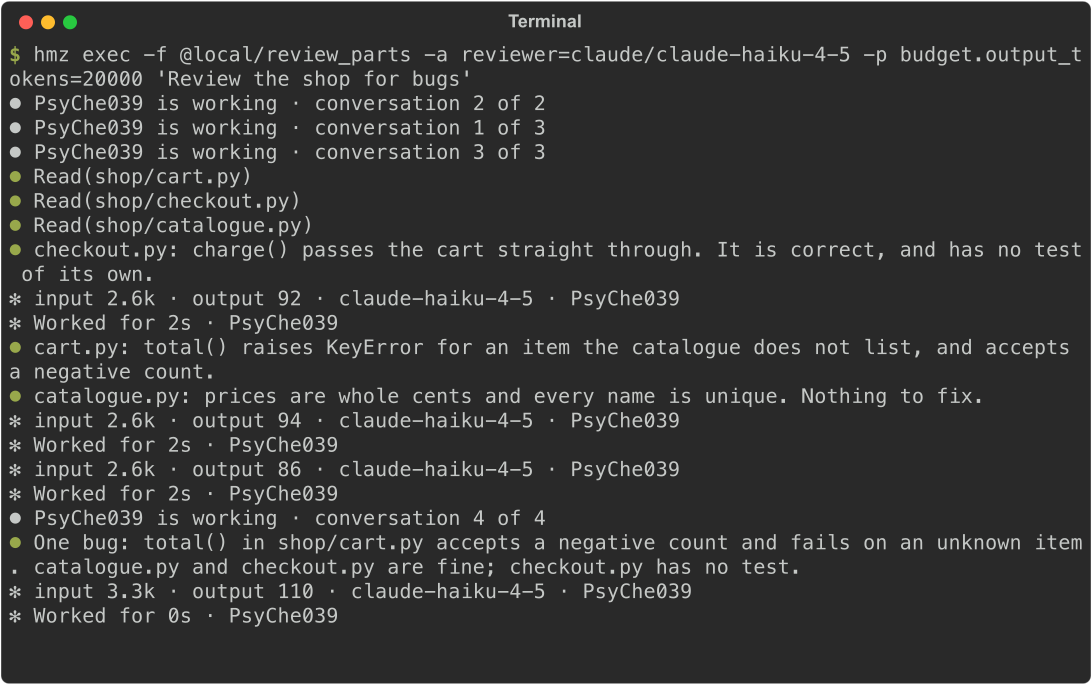
Run the flow with hmz exec. Output lines from concurrent turns interleave as they arrive, and the status line shows 3 turns working.
hmz exec -f @local/review_parts -a reviewer=claude/claude-haiku-4-5 \
    -p budget.output_tokens=20000 "Review the shop for bugs"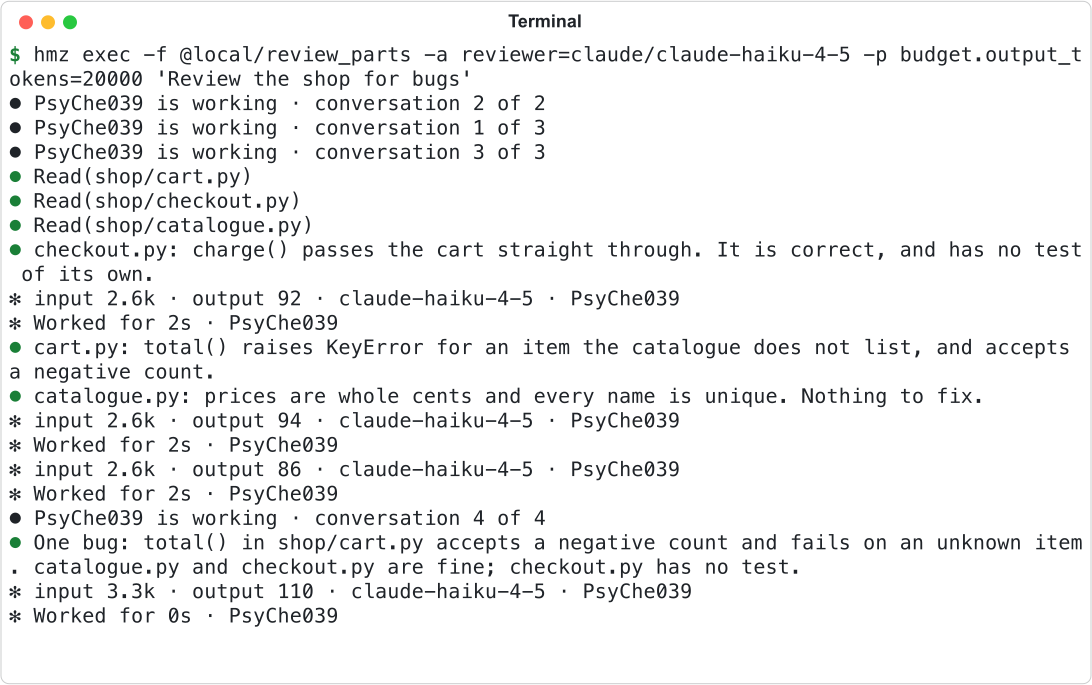
Test that turns overlap
Check peak on FakeAgentDriver to verify the maximum number of sessions open at once. Add a short sleep to the fake reply so the turns overlap.
import asyncio

from hmz.sdk import fakes


def test_three_reviews_run_at_once() -> None:
    async def reply(prompt: str, **_: object) -> str:
        await asyncio.sleep(0.01)  # long enough for the turns to overlap
        return "fine"

    reviewer = fakes.FakeAgentDriver(reply=reply)
    asyncio.run(fakes.run_fake("review_parts", "Review", agents={"reviewer": reviewer}))
    assert reviewer.peak == 3
See Test a flow for more on fakes.
Good to know
spawn()does not start a process. Each agent's CLI starts on its session's first turn, so three concurrent first turns start three CLI processes.- Stopping an epic cancels the flow at its current
await, which interrupts every turn under way, and closes every session: see Context, errors and cleanup. - Calls to other flows run concurrently the same way: see Call another flow.
- To run concurrent turns from a shared conversation history, fork the session first: see Branch a conversation.
- When the flow's time limit passes, the turns under way finish first unless the budget is not graceful, then the flow is cancelled at its
awaitand its caller getsDurationExceeded. A turn or called flow that runs out of its own time raisesDurationExceededin your flow. It is a subclass ofTimeoutError, so catch it beforeTimeoutErrorif you also useasyncio.timeout.